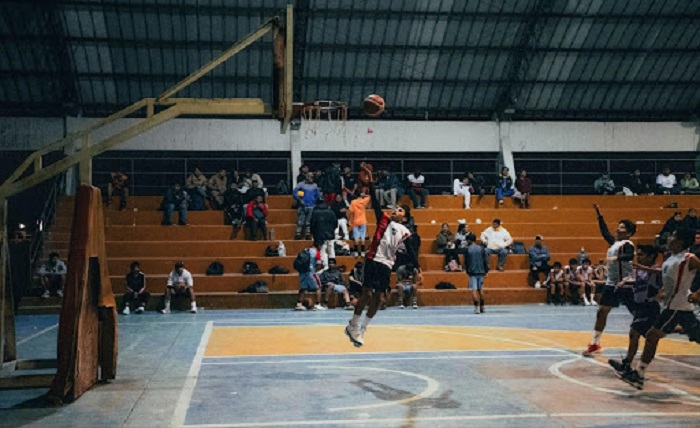
Long before a player becomes a name on a jersey, the Philippines teaches sport in smaller, warmer rooms: a barangay court that doubles as a meeting place. This school quadrangle turns into a weekend arena, a town fiesta where a simple bracket can decide bragging rights until the next year. Basketball dominates that landscape, but it never stands alone. Palarong Pambansa, the annual national games for student-athletes organized by the Department of Education, has long been a proving ground for future standouts across multiple sports, and arnis is formally recognised as the national martial art and sport.
Those grassroots habits have evolved without losing their intimacy. A modern barkada still gathers for a game, but the conversation now stretches across phones. Clips, box scores, and group polls move faster than any tricycle, and discussions about form often drift into online betting Philippines as another way to describe expectations without turning the night into a hunt for profit.
When the Pros Made It Real
The leap from local competitions to a national phenomenon is easiest to trace through the Philippine Basketball Association. Founded in 1975, the PBA became Asia’s first professional basketball league and remains the country’s most recognised domestic stage. Its company-branded teams created rivalries that feel like family arguments: San Miguel Beermen nights, Barangay Ginebra San Miguel drama, TNT Tropang Giga bursts of speed, each a familiar chapter in a long-running story.
With professionalism came rituals. The crowd learned to arrive early, to argue about imports and rotations, to remember old finals as if they were personal memories. In time, the conversation acquired a new dialect. Fans began checking PBA odds the way older generations checked the weather, namely, applicable, imperfect, and never a guarantee. Used responsibly, those numbers simply add a layer: a prompt to ask why a matchup feels heavy, why a star’s efficiency has dipped, why a team’s pace suddenly matters.
Campus Wars That Feel Like National Holidays
Before many players reach the pro stage, they become legends in school colours. The National Collegiate Athletic Association in the Philippines was established in 1924, making it the country’s oldest collegiate athletic association, while the University Athletic Association of the Philippines was established in 1938 and has since become a leading force in Metro Manila sports culture. When UAAP basketball season arrives, it can feel like an annual migration: students, alumni, and casual viewers all returning to a familiar drama.
These leagues helped turn sport into a shared identity, not just entertainment. Rivalries among Ateneo de Manila University, De La Salle University, the University of the Philippines, the University of Santo Tomas, and other member schools create narratives that endure beyond graduation. In the social media era, those narratives live everywhere, from short clips of a game-winner, through long threads dissecting a coach’s last timeout, to highlight edits that make a single player’s footwork feel like a national conversation.
The Provinces Answered Back
For a long time, Philippine sports fame tended to gather around Metro Manila. The MPBL changed the emotional geography. Founded in 2017 by Manny Pacquiao, the Maharlika Pilipinas Basketball League was designed to serve as a gateway for local, homegrown talent, with teams affiliated with cities and provinces. The league’s growth turned regional pride into a weekly spectacle, and a packed gym in Nueva Ecija or Pampanga can feel as electric as any bigger venue when the stakes are local.
Because MPBL games are often shared on Facebook and YouTube, the audience extends beyond the building. A supporter in Mindanao can watch a North Division game, share a clip, and join the argument in real time. In those threads, MPBL odds serve as another analytical tool, particularly when fans compare a player’s recent scoring bursts against defensive matchups or travel schedules. The most productive communities treat that layer as information, not instruction, and keep any wagering firmly inside a controlled leisure budget.
Phones Turned Every Seat into Courtside
The cultural shift of the last decade is not only about who plays but also about how the country watches. Social media in the Philippines is relentless and communal; it turns sport into a continuous stream of reactions rather than a two-hour appointment. Live stats, shot charts, injury updates, and post-game interviews land on phones within minutes, and a single possession can become a meme before the next inbound.
This is also where regulated products sit quietly in the ecosystem. On our platform, adult fans can compare lines, read match previews, and follow how odds change when a lineup shifts, while choosing to keep stakes small or to skip them entirely. In midweek conversations, licensed sports betting Philippines is often mentioned only as shorthand for public expectations, not as a reason to chase losses, and responsible reminders-age limits, spending discipline, the option to stop-should always be louder than hype.
Rivalries, Roads, and Small Businesses
As sports became national phenomena, they also became reasons to travel. A finals series pulls crowds into cities; a big MPBL rivalry fills local eateries; a football matchday brings supporters to new neighbourhoods. Even outside basketball, the pattern holds: communities gather, vendors benefit, transport routes get busy, and a shared event becomes a small local economy for a night.
The Philippines showed its capacity for a national-scale sports spectacle to the world during the 2023 FIBA Basketball World Cup. Moments like that don’t replace barangay tournaments; they amplify them. They remind young players that the path from plastic trophy to national stage is attainable, and they give fans a shared reference point that spans the islands.
What Endures Is the Crowd
Sports culture in the Philippines has expanded outward, yet it still relies on the same human habits: gathering, arguing, laughing, remembering. Digital platforms have accelerated and broadened the conversation, and they have also placed temptation closer to the thumb. An online casino icon can sit beside a live stream, which is why the healthiest sports communities continually reinforce boundaries and treat chance-based play as optional entertainment.
What truly turned local competitions into national phenomena was never only the scoreboard. It was the way Filipinos turned sport into belonging, then carried that belonging from courts to timelines, from towns to arenas, without losing the instinct to cheer together.